
Dermal Fillers in Modern Aesthetics: Subtle, Restorative and Safe Facial Rebalancing

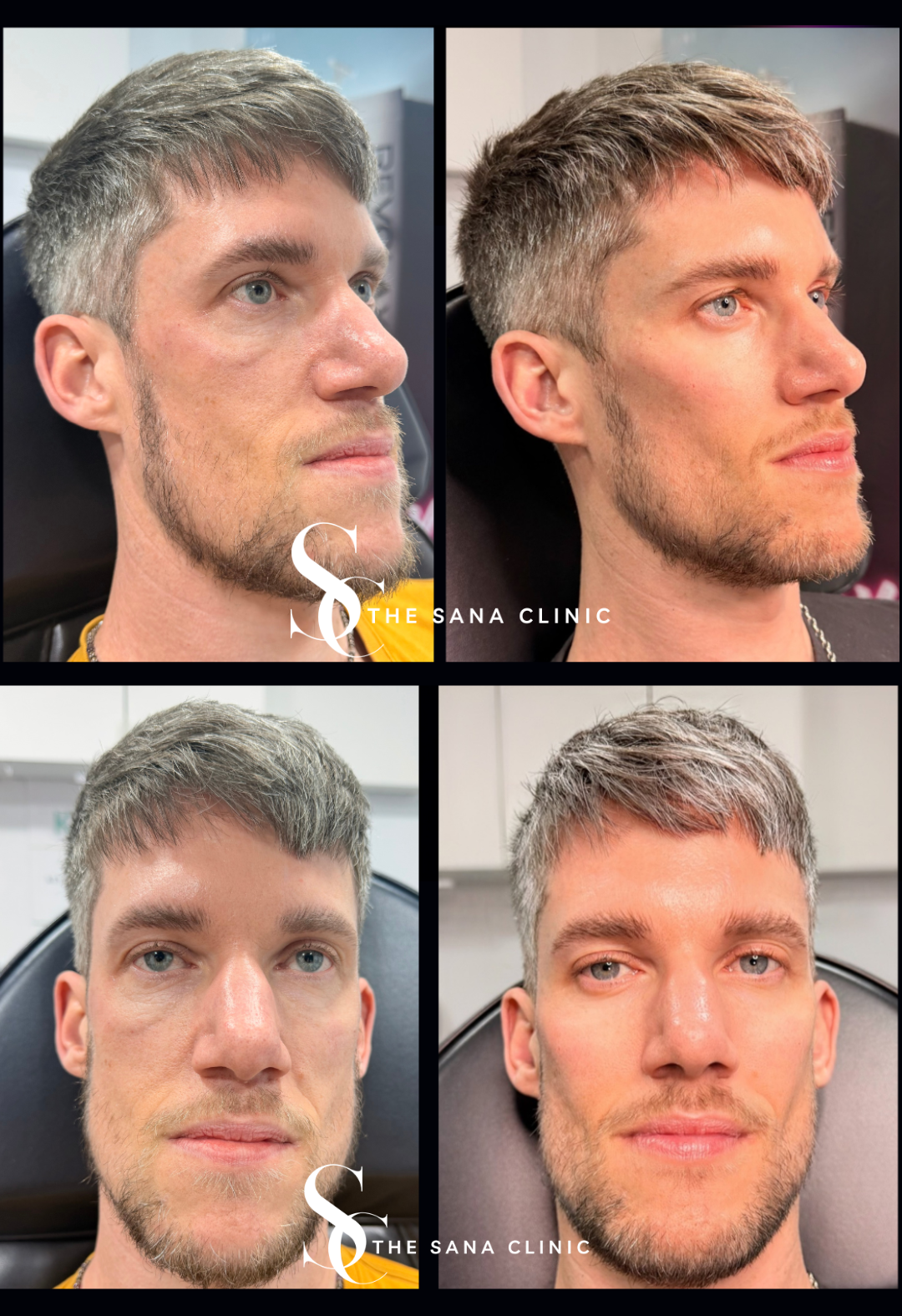
Dermal fillers have changed significantly in modern aesthetics. The best filler work is no longer about making someone look “filled”. It is about restoring what has been lost, supporting facial structure, softening shadows and helping the face look fresher while still looking completely like you.
At The Sana Clinic, the approach to dermal filler is subtle, restorative and anatomy-led. Filler is used to replace volume loss that can occur naturally with ageing, weight loss or lifestyle changes. We are also seeing more patients who have experienced facial hollowing, sagging or loss of support after significant weight loss, including patients using Ozempic or other GLP-1 receptor agonists. In these cases, the aim is not to overfill the face, but to restore proportion, structure and softness in a way that still looks natural.
What can dermal fillers be used for?
Hyaluronic acid dermal fillers can be used to treat several areas, including the lips, cheeks, chin, jawline, temples, tear troughs, nasolabial folds, marionette lines and areas of facial hollowing. They can also be used for facial balancing, profile harmonisation and restoring support where volume loss has changed the way the face moves and rests.
At the clinic, only hyaluronic acid fillers are used. We do not use silicone fillers. Hyaluronic acid is a naturally occurring substance in the body and, importantly, HA fillers can be dissolved with hyaluronidase if clinically necessary.
Why product choice matters
Not all fillers are the same. Different products have different densities, textures, lifting capacities and levels of flexibility. A firmer product may be chosen for structural support in the cheek, chin or jawline, while a softer product may be more appropriate for delicate areas such as the lips or under-eyes.
Good outcomes depend on the right product, placed at the correct depth, with excellent technical skill and a detailed understanding of anatomy. Anatomy is not static. Your face moves when you speak, smile, laugh and express emotion, so filler should look good in real life, not just in a still photograph.
Safety, cannulas and complication management
Dermal filler complications are rare, but they can happen. This is why safety is built into every part of treatment at The Sana Clinic. Where appropriate, Dr Sana offers cannula techniques, which can reduce the number of entry points and may improve safety in selected areas. However, no technique is completely risk-free, so anatomy, product choice, depth and injection method all matter.
Hyaluronidase is available on site should a hyaluronic-acid filler complication ever need urgent management. The mark of a good clinician is not only the ability to create beautiful results, but also the ability to recognise and manage complications safely. As an Emergency Medicine doctor, Dr Sana brings a calm, structured and medically rigorous approach to risk assessment, emergency planning and patient safety.
When dissolving is the best treatment
Sometimes, new patients are encouraged to dissolve pre-existing filler before starting again. This may be because filler has migrated, become heavy, distorted natural anatomy or no longer suits the patient’s face. Very often, after dissolving old filler, patients realise they had forgotten what they actually looked like. In some cases, they choose not to replace the filler at all, and that can be the best outcome.
A good aesthetic plan should never be about adding product for the sake of it. It should be about knowing when to treat, when to wait and when to do less.
Ethical, bespoke and culturally respectful aesthetics
The Sana Clinic does not believe in one version of beauty. Filler should not be used to make every face conform to Western beauty standards or social media trends. Your ethnic background, natural features, identity and facial proportions should be respected.
Every treatment plan is bespoke. The aim is to help you look fresher, softer and more balanced while preserving what makes your face yours.
If you are considering dermal filler, facial balancing or dissolving old filler, book a consultation with Dr Sana at The Sana Clinic in Marylebone or Canary Wharf to discuss whether treatment is suitable for you.
References
Signorini M, Liew S, Sundaram H, et al. Global Aesthetics Consensus: Avoidance and Management of Complications from Hyaluronic Acid Fillers. Plastic and Reconstructive Surgery. 2016.
Lowe S. Hyaluronic Acid Dermal Filler-Associated Vascular Occlusion: A Review of Prevention and Management Strategies. Journal of Cosmetic Dermatology. 2026.
Kroumpouzos G, Treacy P. Hyaluronidase for Dermal Filler Complications: Review of Applications and Dosage Recommendations. JMIR Dermatology. 2024.
Full Face Tailored Treatments Using Hyaluronan Dermal Fillers: A Practical Approach Based on Rheological Properties and Facial Anatomy. Cosmetics. 2024.
Ozempic Face in Plastic Surgery: A Systematic Review of the Literature and Public Perception. Aesthetic Surgery Journal Open Forum. 2025.
Rates of Vascular Occlusion Associated With Using Needles vs Cannulas for Filler Injection. JAMA Dermatology. 2021.
U.S. Food and Drug Administration. Dermal Fillers: Safety Information and Approved Uses.