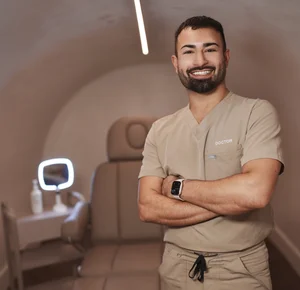

Microneedling for Face and Body: Skin Texture, Scars and Stretch Marks
Microneedling, also known as collagen induction therapy, is a minimally invasive treatment used to improve skin texture, acne scarring, enlarged pores, fine lines, stretch marks and some body scars.
How does Microneedling work?
Microneedling uses fine sterile needles to create controlled micro-injuries in the skin. This stimulates the body’s natural wound-healing response and encourages collagen and elastin production.
Collagen and elastin are the proteins that help skin look smoother, firmer and more resilient.
What can Microneedling treat on the face?
On the face, microneedling can help with dullness, uneven texture, enlarged pores, fine lines and acne scarring.
It is particularly useful for patients who want gradual skin improvement without injectables that change facial shape or volume.
What can Microneedling treat on the body?
Microneedling can also be used on the body, especially for stretch marks, surgical scars, traumatic scars and areas of crepey or uneven skin.
It can be useful for both newer red stretch marks and older white stretch marks, although results vary depending on skin type, depth, age of the stretch marks and treatment consistency.
What results are supported by published data?
The American Academy of Dermatology notes that acne-scar microneedling may require three to five treatments spaced two to four weeks apart, and studies have found this can fade acne scars by around 50% to 70%.
A 2025 prospective study looking at stretch marks found that after four monthly microneedling treatments, early red stretch marks improved by 43.89% at three months and 48.89% at six months. More mature white stretch marks improved by 36.69% at three months and 41.61% at six months.
These results are study findings, not guaranteed outcomes, but they show why microneedling is a valuable treatment for face and body skin quality.
Is Microneedling painful?
A numbing cream is usually applied before treatment, making the procedure very tolerable for most patients.
The treatment itself often takes around 15 to 30 minutes depending on the size of the area.
What is the downtime?
Downtime is usually mild. The skin may look red, tight or sensitive, similar to sunburn, and this typically settles over a few days.
Your aftercare is important, especially avoiding harsh active skincare, sun exposure and heat-based activities immediately after treatment.
How many sessions are needed?
For best results, most patients benefit from an initial course of three to four treatments, usually spaced around four weeks apart.
Maintenance can then be planned depending on your skin, age, lifestyle and treatment goals.
Am I suitable?
A consultation is recommended to assess your skin, treatment area, medical history and expectations.
If you are interested in microneedling for your face, neck, décolletage or body, contact The Sana Clinic in Marylebone or Canary Wharf to discuss whether this treatment is suitable for you.
References
American Academy of Dermatology Association. Microneedling can fade scars, uneven skin tone, and more. AAD Patient Information.
U.S. Food and Drug Administration. Microneedling Devices. FDA Medical Devices.
American Society for Dermatologic Surgery. Microneedling. ASDS Skin Treatments.
Sun X, Jia X, Huang L. Microneedling Therapy for Striae Distensae: Systematic Review and Meta-Analysis. Aesthetic Plastic Surgery. 2024;48:2915–2926.
Comparative Study to Evaluate the Safety and Efficacy of Microneedling as a Stand-Alone Treatment for Striae Rubrae and Striae Albae. Aesthetic Surgery Journal. 2025.
Atiyeh BS, Abou Ghanem O, Chahine F. Microneedling: Percutaneous Collagen Induction Therapy for Management of Scars and Photoaged Skin. Aesthetic Plastic Surgery. 2021;45:296–308.