

Polynucleotides for Skin: Under-Eyes, Face and Neck
Polynucleotides are one of the most exciting treatments in regenerative aesthetics, especially for patients who want fresher, healthier skin without looking over-treated.
What are Polynucleotides?
Polynucleotides are purified DNA fragments, most commonly derived from salmon or trout DNA and carefully processed for medical aesthetic use.
Once injected into the skin, they act as bio-stimulators. Rather than adding volume or changing facial shape, they support repair, hydration and skin quality over time.
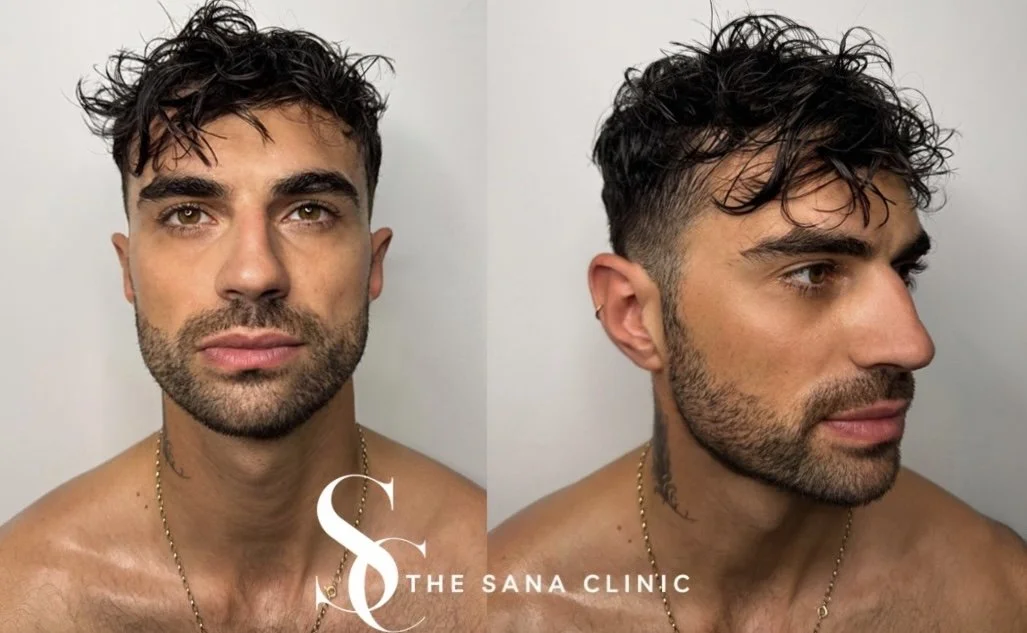
How do Polynucleotides work?
Polynucleotides help improve the skin environment by supporting cellular repair, hydration and collagen production. They are thought to stimulate fibroblasts, the cells responsible for collagen and elastin, which are essential for smoother, firmer and more resilient skin.
The result is not an instant “filled” look. It is a gradual improvement in skin quality.
What areas can be treated?
Polynucleotides can be used for the under-eyes, face, neck and other areas where the skin looks tired, thin, crepey or dehydrated.
The under-eye area is one of the most popular treatment areas, especially for patients with fine lines, thin skin, dark circles linked to poor skin quality or a tired appearance that does not need traditional filler.
How are Polynucleotides different from Dermal Filler?
Dermal filler is usually used to restore volume, structure or contour. Polynucleotides are primarily used to improve skin quality.
They are ideal for patients who want subtle regenerative treatment, especially when the concern is texture, elasticity, crepiness or dullness rather than volume loss.
Is treatment painful?
Treatment is quick and usually very tolerable. The area is cleansed and tiny amounts of product are placed into the skin using a fine needle or cannula, depending on the treatment area.
Numbing cream can be used for comfort, and downtime is usually minimal.
How many sessions are needed?
For optimal results, most patients benefit from an initial course of three to four sessions, spaced two to four weeks apart.
Maintenance is usually recommended at around six months, depending on your skin quality, age, lifestyle and treatment goals.
Am I suitable for Polynucleotides?
Suitability depends on your skin, anatomy, medical history and goals. At The Sana Clinic, every treatment starts with a doctor-led consultation to decide whether polynucleotides are appropriate for you.
If you are interested in polynucleotides for your under-eyes, face or neck, contact The Sana Clinic in Marylebone or Canary Wharf to discuss a personalised treatment plan.
References
Khan A, Wang G, Zhou F, et al. Polydeoxyribonucleotide: A promising skin anti-aging agent. Chinese Journal of Plastic and Reconstructive Surgery. 2022;4(4):187–193.
Webb WR, Rahman E, Rao P, et al. Points to ponder on the role of polynucleotides in regenerative and aesthetic medicine: a systematic review. European Journal of Plastic Surgery. 2024.
The Effectiveness of Polynucleotides in Esthetic Medicine: A Systematic Review. Journal of Cosmetic Dermatology.
Amado R, Al-Mukhtar Y, Lanza E, et al. A Real-World Study of Polynucleotides HPT for Treating Periorbital Hyperpigmentation. Clinical, Cosmetic and Investigational Dermatology.